
Catholic vs Independent Schools in Australia: What the Data Shows
Choosing between a Catholic school and an independent school is one of the most common decisions Australian families face when exploring private education. It is also one of the least well understood.
Much of the public conversation relies on reputation, word of mouth, or fee comparisons. Very little of it is grounded in structured, comparable data. Schools360 assessed 194 Catholic schools and 371 independent schools across Australia using the same 15-factor framework, covering academic performance, student wellbeing, learning programs, learning environment, and institutional excellence.
The findings challenge several assumptions about what separates these two sectors and reveal where each type of school tends to excel.
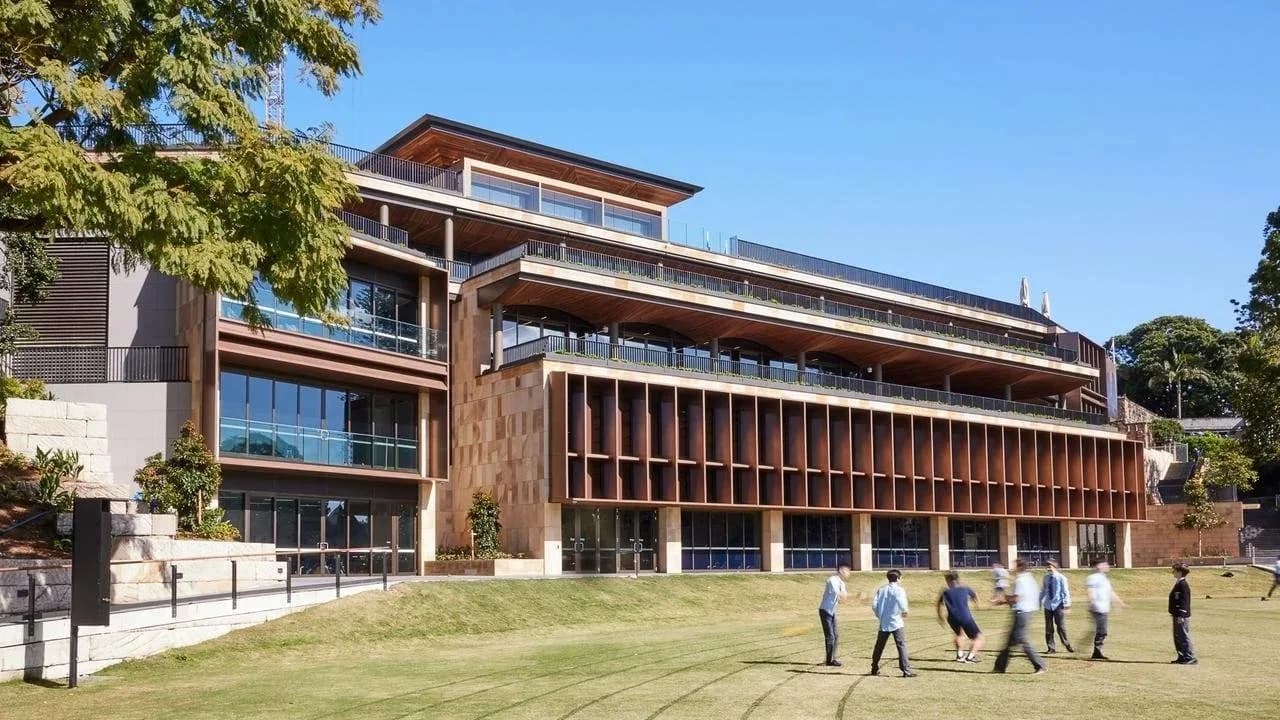
The headline: Both sectors produce excellent schools
The most important finding is also the simplest. Both Catholic and independent schools are well represented across the highest performance tiers on Schools360. Three Catholic schools achieved Elite status (the platform's highest tier), 24 reached Distinguished, and 64 were rated Leading. These are strong schools by any measure.
Independent schools, with a larger sample size, placed 59 in the Elite tier and 89 in Distinguished. The difference reflects the broader range of the independent sector, which includes everything from large established grammar schools to small specialist colleges, rather than any categorical superiority.
The average S360 Score for Catholic schools was 72.5%, compared with 77.9% for independent schools. That gap of 5.4 percentage points is meaningful but modest, and it narrows considerably in specific dimensions.
Where Catholic schools stand out: Student Wellbeing
If there is a single area where Catholic schools most closely match their independent counterparts, it is Student Wellbeing. The gap between the two sectors in this dimension was just 3.8 percentage points, the smallest of any area assessed.
More tellingly, 43% of Catholic schools had Student Wellbeing as their strongest performing dimension, compared with 32% of independent schools. This is consistent with the pastoral care traditions that underpin Catholic education, where the development of the whole student is treated as a foundational priority rather than an add-on.
For families who place a high value on pastoral support, structured values-based frameworks, and a strong sense of community, this finding is worth noting. Catholic schools, on average, invest heavily in the student experience beyond the classroom, and the data reflects that investment.
Where the gap is widest: Academic Excellence
The largest performance gap between the two sectors appeared in Academic Excellence, where independent schools led by 7.6 percentage points. This dimension captures outcomes such as VCE, HSC, and ATAR performance alongside measures of academic rigour and university pathways.
However, the gap is not as uniform as the average suggests. Among the top-performing Catholic schools, academic outcomes are strong. All Hallows' School in Queensland (90.3%), Loreto Mandeville Hall in Victoria (89.5%), and Xavier College in Melbourne (87.8%) all achieved Elite-tier scores, with academic results that rival the most established independent grammar schools.
The sector-wide average is influenced by the large number of Catholic systemic schools that serve broad communities, often with non-selective enrolment policies. These schools are doing important work in accessibility and inclusion, and their academic outcomes should be read in that context.
Learning Programs: A quiet strength
Catholic schools averaged 73.6% on Learning Programs, which covers curriculum breadth, co-curricular offerings, and sports programs. The gap to independent schools (78.1%) was 4.4 percentage points, the second-smallest of any dimension.
This area captures something parents often discover only after enrolling: the breadth of what is on offer beyond the core curriculum. Many Catholic schools, particularly larger ones, deliver extensive co-curricular and sports programs that match or approach independent school offerings, frequently at a lower fee point.
Catholic girls' schools: A consistent performer
Within the Catholic sector, girls' schools scored highest on average at 73.0%, followed by boys' schools at 73.9% (boosted by several high-scoring Jesuit and Marist colleges) and co-educational schools at 71.7%.
Catholic girls' schools represent a large cohort: 50 schools across the dataset. Many are operated by religious orders with long histories in education, including the Loreto, Mercy, Presentation, and Sacred Heart traditions. Their consistency across the framework reflects deeply embedded approaches to student formation, academic expectation, and institutional identity.
The consistency factor
One underappreciated feature of the Catholic sector is its consistency. The standard deviation of S360 Scores among Catholic schools was 6.7 percentage points, compared with 8.1 for independent schools. In practical terms, this means Catholic schools are more tightly clustered around their average. There are fewer extreme outliers in either direction.
For parents, this has a practical implication. When choosing a Catholic school, the range of likely outcomes is narrower. The difference between a highly-rated Catholic school and an average one is smaller than the equivalent gap in the independent sector. For families looking for reliable, well-structured education without the research burden of navigating a wider quality spectrum, this consistency is itself a form of value.
State by state: The gap varies
The performance gap between Catholic and independent schools is not constant across Australia. It is narrowest in South Australia, where Catholic schools averaged 74.1% against 75.5% for independent schools, a gap of just 1.4 percentage points. Queensland was similarly close, at 74.4% versus 76.9%.
Victoria showed the widest gap, with Catholic schools averaging 69.7% compared with 78.6% for independent schools. This partly reflects the concentration of high-fee, highly resourced independent schools in Melbourne's inner suburbs, which raises the independent average. Victoria also has the largest number of Catholic schools in the dataset at 57, providing a broad and diverse sample.
What this means for families
The data points to a clear conclusion: the choice between Catholic and independent is not a choice between better and worse. It is a choice between different profiles of strength.
Catholic schools, on average, deliver their strongest performance in student wellbeing, learning programs, and learning environment. They offer tighter consistency, a values-based educational philosophy, and frequently do so at a lower fee point. For families who prioritise pastoral care, community, and holistic development, Catholic schools present a compelling proposition grounded in the data.
Independent schools, on average, show stronger academic outcomes and a wider range of institutional profiles. They include some of Australia's highest-performing schools across every dimension. For families who prioritise academic selectivity, breadth of resources, or a specific educational philosophy not available in the Catholic system, the independent sector offers the widest range of options.
The best school for any family is the one that aligns with their values, their child's needs, and the specific strengths that matter most to them. The data exists to inform that decision. The choice remains personal.
The top Catholic schools on Schools360
How Schools360 assesses schools
Schools360 evaluates every school using the same structured 15-factor framework, grouped into five core dimensions: Academic Excellence, Student Wellbeing, Learning Programs, Learning Environment, and Institutional Excellence. Assessments are based on publicly available data and independent analysis. Schools are not assessed by sector, fee level, or reputation. They are assessed on what they deliver.
Explore the full rankings and school profiles at schools-360.com.au.
This analysis is based on Schools360 data as at April 2026. Schools360 is an independent platform and is not affiliated with any school, diocese, or education authority.